Project Overview:

The world’s estimated 425 oak species exchange genes with their close relatives through hybridization. The Quercus Quest campaign is supported by a grant from the National Science Foundation's Dimensions of Biodiversity Program (learn more about our research partners below), which is investigating how this exchange of genetic material allows oaks to adapt to new environments, and how oaks then shape the populations of insect and fungal species that depend on them. Because hybridization depends on the timing of pollen movement between species, and because the fungi and insects that live on oaks respond to the timing of leaf and root production, phenology is key to understanding the complexities of oak ecosystems.
Your data collected as part of this campaign will be used to understand the relationship between climate and leaf and flowering phenology in eastern white oak, bur oak, and their relatives.
You can also learn more about the research behind this campaign in our recorded webinar from last year.
SIGN UP FOR Quercus Quest MESSAGES!
You will receive messages full of findings, observation tips, and campaign-specific opportunities. Don't miss out!
HOW TO PARTICIPATE:
1. Join Nature's Notebook. If you haven't already, create a Nature's Notebook account. If you need more details on getting started, take the Observer Certification Course available at learning.usanpn.org. You can also view this webinar recording that describes how to participate in the campaign.
2. Select one (or more) individual oak trees to track from the list below. Need help identifying oaks? Check out this great resource from the US Forest Service.
- white oak (Quercus alba)
- swamp white oak (Quercus bicolor)
- sand live oak (Quercus geminata)
- overcup oak (Quercus lyrata)
- bur oak (Quercus macrocarpa)
- swamp chestnut oak (Quercus michauxii)
- chestnut oak (Quercus montana)
- chinquapin oak (Quercus muehlenbergii)
- dwarf chinquapin oak (Quercus prinoides)
- post oak (Quercus stellata)
- southern live oak (Quercus virginiana)
Note: When you register your oak tree(s), please include details on the Add or Edit a Plant page in your Observation Deck about whether the tree was planted (if known), and if so, the approximate planting date.
3. Take observations. We invite you to track leafing and flowering in your trees ideally 2-4 times a week, in the spring and autumn. We are especially interested in the following phenophases, though you are welcome to report on fruiting as well.
4. Report your observations. As you collect data during the season, log in to your Nature's Notebook account and enter the observation data you recorded. You can also use the Nature's Notebook app to submit your observations!
| Phenophase | Definition | Photo (Click to enlarge) |
|---|---|---|
| Breaking leaf buds | One or more breaking leaf buds are visible on the plant. A leaf bud is considered "breaking" once a green leaf tip is visible at the end of the bud, but before the first leaf from the bud has unfolded to expose the leaf stalk (petiole) or leaf base. | 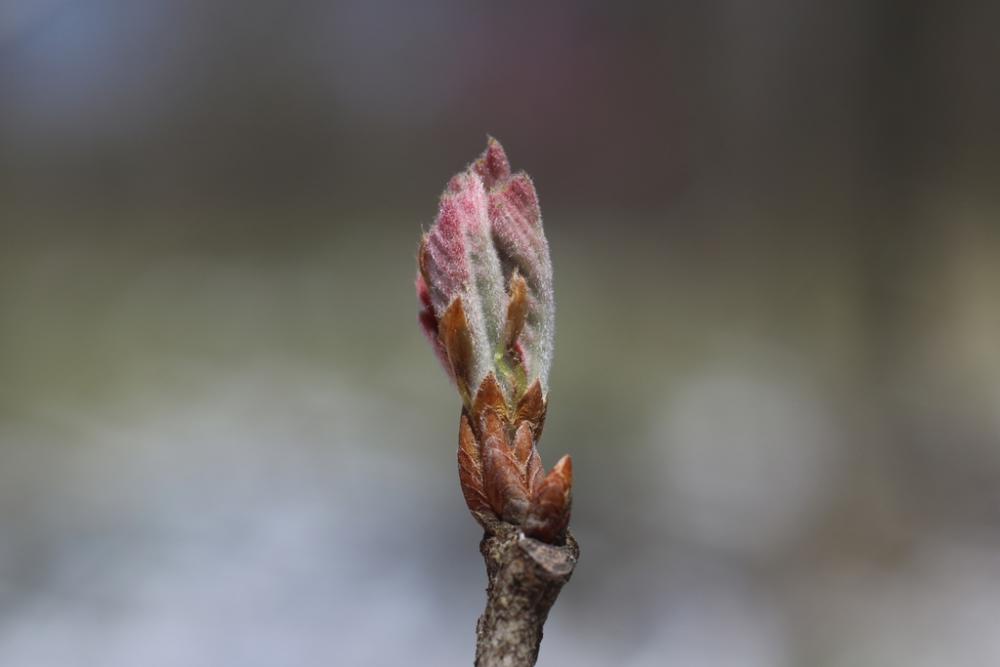 |
| Leaves | One or more live, unfolded leaves are visible on the plant. A leaf is considered "unfolded" once its entire length has emerged from a breaking bud, stem node or growing stem tip, so that the leaf stalk (petiole) or leaf base is visible at its point of attachment to the stem. Do not include fully dried or dead leaves. | 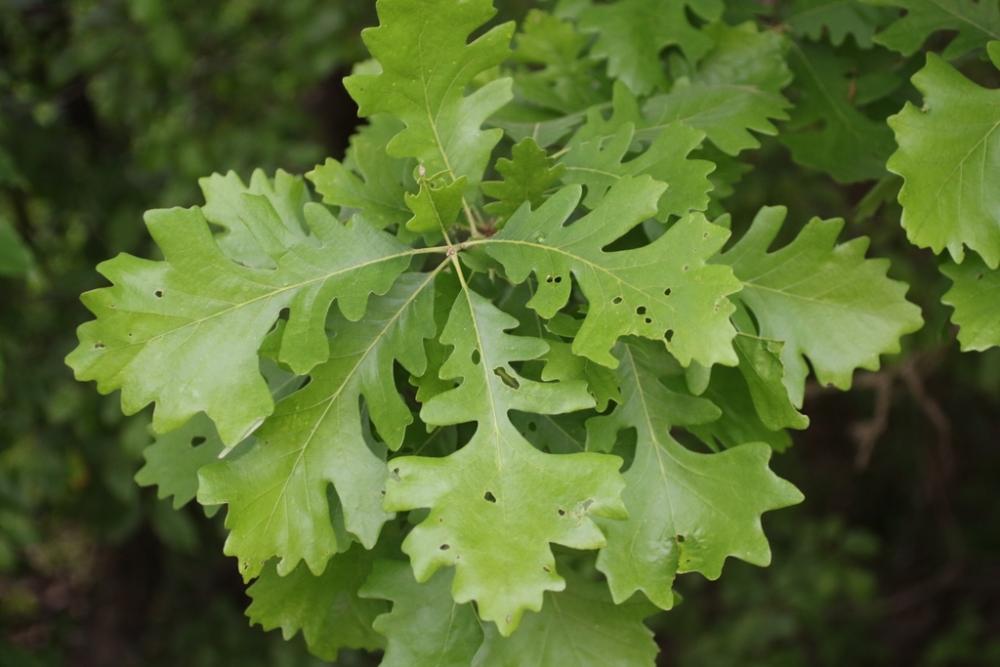 |
| Early season leaf expansion | A majority of leaves on the plant have not yet reached their full size and are still growing larger. Do not include new leaves that continue to emerge at the ends of elongating stems throughout the growing season. | 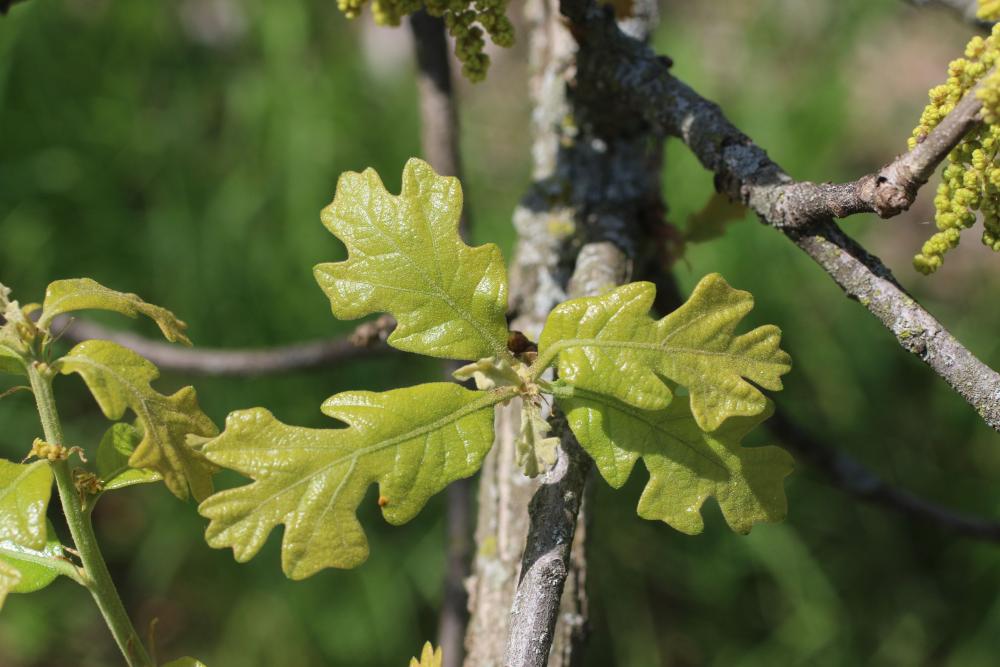 |
| Colored leaves | One or more leaves show some of their typical late-season color, or yellow or brown due to drought or other stresses. Do not include small spots of color due to minor leaf damage, or dieback on branches that have broken. Do not include fully dried or dead leaves that remain on the plant. | photo coming soon |
| Falling leaves | One or more leaves with typical late-season color, or yellow or brown due to other stresses, are falling or have recently fallen from the plant. Do not include fully dried or dead leaves that remain on the plant for many days before falling. | not pictured |
| Flowers or flower buds | One or more fresh open or unopened flowers or flower buds are visible on the plant. Include flower buds or inflorescences that are swelling or expanding, but do not include those that are tightly closed and not actively growing (dormant). Also do not include wilted or dried flowers. For Quercus macrocarpa, the male inflorescence is a catkin which is initially compact and stiff, but eventually unfolds to become longer and hang loosely from the branch. Female flowers are very small and petal-less, emerging from the growing stem at the point where a new leaf is attached. | 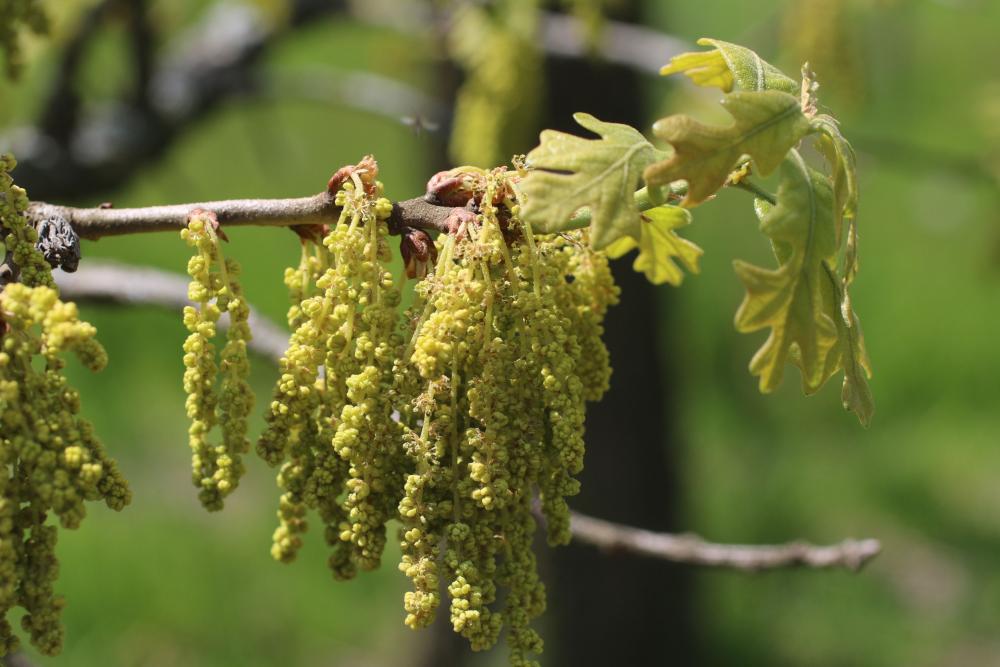 |
| Open flowers | One or more open, fresh flowers are visible on the plant. Flowers are considered "open" when the reproductive parts (male stamens or female pistils) are visible between or within unfolded or open flower parts (petals, floral tubes or sepals). Do not include wilted or dried flowers. For Quercus macrocarpa, the male flowers will open once the initially compact catkin has unfolded and is hanging loosely. Female flowers are open when the pistils are visible, but will be very difficult to see where they are out of reach. | photo coming soon |
EARN YOUR Quercus Quest BADGE
See it on your Observation Deck.

Research team
| Andrew Hipp, Senior Scientist in Plant Systematics and Herbarium Director, The Morton Arboretum | |
| Heather McCarthy, Department of Microbiology and Plant Biology, University of Oklahoma | |
| Jeannine Cavender-Bares, University of Minnesota | |
| Ian Pearse, U.S. Geological Survey, Fort Collins Science Center, Fort Collins, CO | |
| Paul Manos, Professor, Department of Biology, Duke University |
This material is based upon work supported by the National Science Foundation under Grant No. 2129281.
Questions about this campaign? Email Erin Posthumus, USA-NPN Outreach Coordinator at erin@usanpn.org.